
How to Film Brand Stories That People Watch
Book a Discovery Call
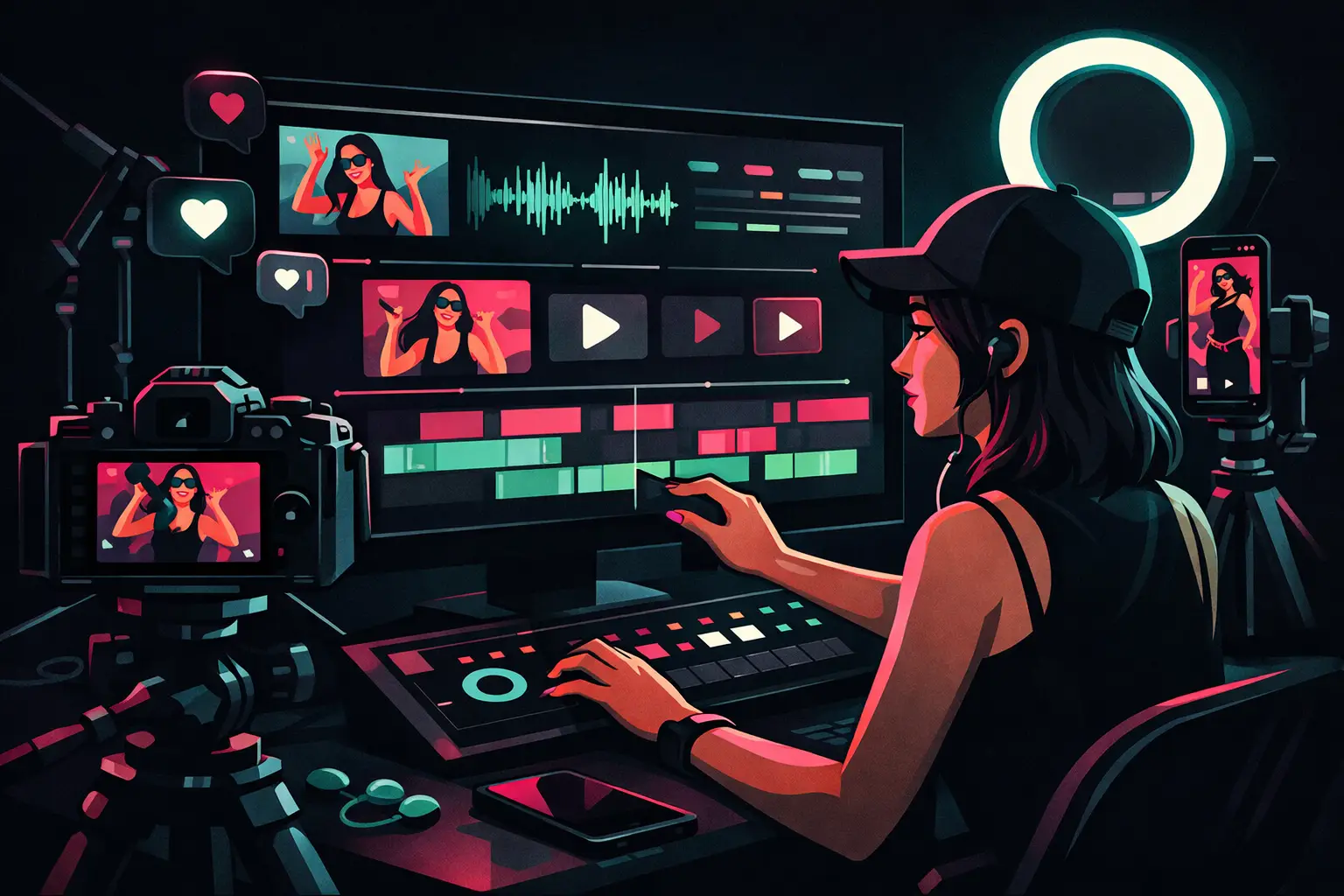
Most brand videos fail in the first three seconds. Not because the camera is bad. Not because the edit is rough. Because the story says nothing worth watching. If you want to learn how to film brand stories, start there. Attention first. Message second. Everything else supports it.
A brand story is not your origin story read out to camera. It is not a polished company overview with soft music and drone shots. It is a clear, visual reason to care. Why this brand exists. Who it helps. What changed because it showed up.
That matters even more on social. People do not sit back and wait to be impressed. They scroll. Fast. Your story has to earn the next second.
What a brand story actually needs
Good brand storytelling is tighter than most businesses think. You do not need every milestone, every service, and every selling point in one film. You need one central idea.
Usually, that idea sits inside a simple tension. Before and after. Problem and progress. Friction and relief. The best brand stories show movement. They give the audience a clear sense that something improved, shifted, or became possible.
If you skip that tension, the film drifts. It becomes a montage. Nice shots. No pull.
So before you touch a camera, answer three questions. Who is this for? What do they care about? What should they feel by the end? If those answers are fuzzy, your footage will be too.
How to film brand stories without making them feel staged
The fastest way to kill credibility is to over-script every line and over-direct every moment. People can spot it instantly. Especially in founder-led brands, service businesses, and social-first campaigns.
You want structure, not stiffness.
Start with a story spine. Keep it lean. What was the problem? Why did this brand decide to solve it? What does the brand believe that others miss? What does the customer get now that they did not get before? That is enough to shape the film.
Then build scenes that support it. A founder at work. Product in use. Team interactions. Customer reactions. Process details. Real environments always beat generic visuals because they carry proof. They show how the brand behaves, not just how it wants to be seen.
If someone is speaking on camera, do not make them memorise a paragraph. Give them prompts. Short ones. Let them answer in their own words. You will get better tone, better rhythm, and far more usable soundbites.
That does mean the shoot can feel less neat in the moment. Worth it. Real usually performs better than polished if polished starts to feel false.
Plan the film around moments, not just shots
A weak shoot list often reads like this: wide shot of office, close-up of laptop, team meeting, product shot. Fine on paper. Flat on screen.
A stronger plan focuses on moments with purpose. A customer opening the package. A founder explaining the turning point. A designer fixing the detail nobody else notices. A client using the service in the exact situation it was built for.
Moments create meaning. Shots just capture them.
That shift changes how you film. You stop chasing random B-roll and start looking for proof. Hands doing the work. Faces reacting. Friction in the process. Relief at the outcome. Those details make a story feel lived in.
It also helps with efficiency. Time-poor teams do not have hours to waste on vague creative direction. A clear run of scenes keeps the day moving and gives the edit a proper backbone.
Your first five seconds do the heavy lifting
This is where most branded content loses the room.
Do not open with the logo. Do not open with a slow cinematic reveal unless the audience already cares. Open on the sharpest idea in the film. A strong line. A visual contradiction. A result that makes people stop.
If the story is about speed, show speed. If it is about transformation, show the contrast immediately. If it is about trust, open on a moment that proves reliability, not a line that claims it.
Think less like a corporate videographer and more like an editor trying to survive the feed.
This does not mean every film needs shouting, fast cuts, or trend-led chaos. It means the opening needs intent. Calm can work. Slow can work. But only if the first frame still creates curiosity.
Sound matters more than most brands realise
People forgive a slightly imperfect frame. They do not forgive bad audio.
If your founder sounds distant, echoey, or unclear, the film feels cheap. No matter how good the camera is. So prioritise clean sound from the start. Use a proper microphone. Control background noise. Record room tone. Listen back on site.
Music matters too, but it should support the mood, not smother the message. If the track is doing all the emotional work, the story is probably undercooked.
The same goes for voiceover. Use it when it adds clarity or pace. Not as a patch for weak visuals.
Show the brand through behaviour
A lot of businesses talk about values. Fewer can film them.
That is the gap to close.
If a brand says it is detail-driven, show the detail. If it says it is customer-first, show the response, the service, the extra effort. If it says it moves fast, show the pace of execution. The best brand stories do not explain the brand at length. They reveal it through choices.
This is where filming style matters. Camera movement, framing, lighting, and edit rhythm all shape perception. Clean, controlled shots can make a brand feel premium. Handheld energy can make it feel immediate and human. Faster pacing can signal momentum. Longer takes can build trust.
There is no single right style. It depends on the audience and the platform. A luxury product brand needs a different visual language from a founder-led service business. A paid social ad needs a different structure from a homepage film. Same core story. Different execution.
That is the trade-off. Brand consistency matters, but format fit matters too. Force one style across every channel and results usually dip.
Editing is where the story gets honest
The edit tells you what the film really is. Not what you hoped it would be.
If the pace drags, the message is too broad, or the best lines arrive too late, the edit exposes it fast. That is why strong filming and strong editing have to work together. One without the other rarely lands.
Cut hard. Keep only what moves the story forward. If a shot is beautiful but says nothing, lose it. If a line sounds polished but not believable, lose it. Clarity beats sentiment.
Text on screen can help, especially on social where many people watch with sound off. But keep it clean. Short phrases. Real payoff. Not paragraphs.
And always edit for the platform, not just for your internal taste. A ninety-second film may work on a landing page and fail on Instagram. A punchy twenty-second cut may perform brilliantly as paid creative and still need a longer version for brand depth. One shoot can produce both if you plan properly.
Common mistakes when filming brand stories
The biggest mistake is trying to say everything. Too many brands cram in the full company history, every offer, every audience, every aspiration. The result feels vague because nothing gets enough room to matter.
The second mistake is chasing polish over truth. Perfect lighting and smooth transitions cannot save a weak message. Nor can expensive kit fix a story with no tension.
The third is forgetting the audience. Founders often film the story they want to tell, not the one the buyer needs to hear. Those are not always the same thing. The audience cares less about your timeline and more about the problem you solve and the standard you hold.
A fourth mistake. Treating brand storytelling as separate from performance. It is not. A good brand story should make the next step easier. More trust. More recall. Better conversion. Stronger creative for paid and organic. At Cruz Creative, that is the line we care about most - story that looks good and does a job.
How to make your brand story film work harder
Think beyond one hero video. Film once. Build a content system.
Capture the core story, then break it into usable parts. Founder clips. Product moments. Testimonial sections. Behind-the-scenes footage. Vertical cut-downs. Silent versions with captions. Hooks for paid. Social edits for retargeting. Suddenly the shoot is not a cost for one asset. It is a bank of content with range.
That approach also keeps the story consistent across channels without making it repetitive. Same message. Different entry points.
And if you or your client hate being on camera, that is not a dead end. Use hands, environments, voiceover, customer perspective, or spokesperson-led delivery. The story still needs a human angle, but the founder does not have to carry every frame.
A brand story works when people feel something clear and useful. Trust. Relevance. Curiosity. Confidence. Not because the video looked expensive, but because it made the brand easier to believe. Film for that, and the story has a chance to stick long after the scroll.
Book a Discovery Call
Most brand videos fail in the first three seconds. Not because the camera is bad. Not because the edit is rough. Because the story says nothing worth watching. If you want to learn how to film brand stories, start there. Attention first. Message second. Everything else supports it.
A brand story is not your origin story read out to camera. It is not a polished company overview with soft music and drone shots. It is a clear, visual reason to care. Why this brand exists. Who it helps. What changed because it showed up.
That matters even more on social. People do not sit back and wait to be impressed. They scroll. Fast. Your story has to earn the next second.
What a brand story actually needs
Good brand storytelling is tighter than most businesses think. You do not need every milestone, every service, and every selling point in one film. You need one central idea.
Usually, that idea sits inside a simple tension. Before and after. Problem and progress. Friction and relief. The best brand stories show movement. They give the audience a clear sense that something improved, shifted, or became possible.
If you skip that tension, the film drifts. It becomes a montage. Nice shots. No pull.
So before you touch a camera, answer three questions. Who is this for? What do they care about? What should they feel by the end? If those answers are fuzzy, your footage will be too.
How to film brand stories without making them feel staged
The fastest way to kill credibility is to over-script every line and over-direct every moment. People can spot it instantly. Especially in founder-led brands, service businesses, and social-first campaigns.
You want structure, not stiffness.
Start with a story spine. Keep it lean. What was the problem? Why did this brand decide to solve it? What does the brand believe that others miss? What does the customer get now that they did not get before? That is enough to shape the film.
Then build scenes that support it. A founder at work. Product in use. Team interactions. Customer reactions. Process details. Real environments always beat generic visuals because they carry proof. They show how the brand behaves, not just how it wants to be seen.
If someone is speaking on camera, do not make them memorise a paragraph. Give them prompts. Short ones. Let them answer in their own words. You will get better tone, better rhythm, and far more usable soundbites.
That does mean the shoot can feel less neat in the moment. Worth it. Real usually performs better than polished if polished starts to feel false.
Plan the film around moments, not just shots
A weak shoot list often reads like this: wide shot of office, close-up of laptop, team meeting, product shot. Fine on paper. Flat on screen.
A stronger plan focuses on moments with purpose. A customer opening the package. A founder explaining the turning point. A designer fixing the detail nobody else notices. A client using the service in the exact situation it was built for.
Moments create meaning. Shots just capture them.
That shift changes how you film. You stop chasing random B-roll and start looking for proof. Hands doing the work. Faces reacting. Friction in the process. Relief at the outcome. Those details make a story feel lived in.
It also helps with efficiency. Time-poor teams do not have hours to waste on vague creative direction. A clear run of scenes keeps the day moving and gives the edit a proper backbone.
Your first five seconds do the heavy lifting
This is where most branded content loses the room.
Do not open with the logo. Do not open with a slow cinematic reveal unless the audience already cares. Open on the sharpest idea in the film. A strong line. A visual contradiction. A result that makes people stop.
If the story is about speed, show speed. If it is about transformation, show the contrast immediately. If it is about trust, open on a moment that proves reliability, not a line that claims it.
Think less like a corporate videographer and more like an editor trying to survive the feed.
This does not mean every film needs shouting, fast cuts, or trend-led chaos. It means the opening needs intent. Calm can work. Slow can work. But only if the first frame still creates curiosity.
Sound matters more than most brands realise
People forgive a slightly imperfect frame. They do not forgive bad audio.
If your founder sounds distant, echoey, or unclear, the film feels cheap. No matter how good the camera is. So prioritise clean sound from the start. Use a proper microphone. Control background noise. Record room tone. Listen back on site.
Music matters too, but it should support the mood, not smother the message. If the track is doing all the emotional work, the story is probably undercooked.
The same goes for voiceover. Use it when it adds clarity or pace. Not as a patch for weak visuals.
Show the brand through behaviour
A lot of businesses talk about values. Fewer can film them.
That is the gap to close.
If a brand says it is detail-driven, show the detail. If it says it is customer-first, show the response, the service, the extra effort. If it says it moves fast, show the pace of execution. The best brand stories do not explain the brand at length. They reveal it through choices.
This is where filming style matters. Camera movement, framing, lighting, and edit rhythm all shape perception. Clean, controlled shots can make a brand feel premium. Handheld energy can make it feel immediate and human. Faster pacing can signal momentum. Longer takes can build trust.
There is no single right style. It depends on the audience and the platform. A luxury product brand needs a different visual language from a founder-led service business. A paid social ad needs a different structure from a homepage film. Same core story. Different execution.
That is the trade-off. Brand consistency matters, but format fit matters too. Force one style across every channel and results usually dip.
Editing is where the story gets honest
The edit tells you what the film really is. Not what you hoped it would be.
If the pace drags, the message is too broad, or the best lines arrive too late, the edit exposes it fast. That is why strong filming and strong editing have to work together. One without the other rarely lands.
Cut hard. Keep only what moves the story forward. If a shot is beautiful but says nothing, lose it. If a line sounds polished but not believable, lose it. Clarity beats sentiment.
Text on screen can help, especially on social where many people watch with sound off. But keep it clean. Short phrases. Real payoff. Not paragraphs.
And always edit for the platform, not just for your internal taste. A ninety-second film may work on a landing page and fail on Instagram. A punchy twenty-second cut may perform brilliantly as paid creative and still need a longer version for brand depth. One shoot can produce both if you plan properly.
Common mistakes when filming brand stories
The biggest mistake is trying to say everything. Too many brands cram in the full company history, every offer, every audience, every aspiration. The result feels vague because nothing gets enough room to matter.
The second mistake is chasing polish over truth. Perfect lighting and smooth transitions cannot save a weak message. Nor can expensive kit fix a story with no tension.
The third is forgetting the audience. Founders often film the story they want to tell, not the one the buyer needs to hear. Those are not always the same thing. The audience cares less about your timeline and more about the problem you solve and the standard you hold.
A fourth mistake. Treating brand storytelling as separate from performance. It is not. A good brand story should make the next step easier. More trust. More recall. Better conversion. Stronger creative for paid and organic. At Cruz Creative, that is the line we care about most - story that looks good and does a job.
How to make your brand story film work harder
Think beyond one hero video. Film once. Build a content system.
Capture the core story, then break it into usable parts. Founder clips. Product moments. Testimonial sections. Behind-the-scenes footage. Vertical cut-downs. Silent versions with captions. Hooks for paid. Social edits for retargeting. Suddenly the shoot is not a cost for one asset. It is a bank of content with range.
That approach also keeps the story consistent across channels without making it repetitive. Same message. Different entry points.
And if you or your client hate being on camera, that is not a dead end. Use hands, environments, voiceover, customer perspective, or spokesperson-led delivery. The story still needs a human angle, but the founder does not have to carry every frame.
A brand story works when people feel something clear and useful. Trust. Relevance. Curiosity. Confidence. Not because the video looked expensive, but because it made the brand easier to believe. Film for that, and the story has a chance to stick long after the scroll.
Book a Discovery Call
Most brand videos fail in the first three seconds. Not because the camera is bad. Not because the edit is rough. Because the story says nothing worth watching. If you want to learn how to film brand stories, start there. Attention first. Message second. Everything else supports it.
A brand story is not your origin story read out to camera. It is not a polished company overview with soft music and drone shots. It is a clear, visual reason to care. Why this brand exists. Who it helps. What changed because it showed up.
That matters even more on social. People do not sit back and wait to be impressed. They scroll. Fast. Your story has to earn the next second.
What a brand story actually needs
Good brand storytelling is tighter than most businesses think. You do not need every milestone, every service, and every selling point in one film. You need one central idea.
Usually, that idea sits inside a simple tension. Before and after. Problem and progress. Friction and relief. The best brand stories show movement. They give the audience a clear sense that something improved, shifted, or became possible.
If you skip that tension, the film drifts. It becomes a montage. Nice shots. No pull.
So before you touch a camera, answer three questions. Who is this for? What do they care about? What should they feel by the end? If those answers are fuzzy, your footage will be too.
How to film brand stories without making them feel staged
The fastest way to kill credibility is to over-script every line and over-direct every moment. People can spot it instantly. Especially in founder-led brands, service businesses, and social-first campaigns.
You want structure, not stiffness.
Start with a story spine. Keep it lean. What was the problem? Why did this brand decide to solve it? What does the brand believe that others miss? What does the customer get now that they did not get before? That is enough to shape the film.
Then build scenes that support it. A founder at work. Product in use. Team interactions. Customer reactions. Process details. Real environments always beat generic visuals because they carry proof. They show how the brand behaves, not just how it wants to be seen.
If someone is speaking on camera, do not make them memorise a paragraph. Give them prompts. Short ones. Let them answer in their own words. You will get better tone, better rhythm, and far more usable soundbites.
That does mean the shoot can feel less neat in the moment. Worth it. Real usually performs better than polished if polished starts to feel false.
Plan the film around moments, not just shots
A weak shoot list often reads like this: wide shot of office, close-up of laptop, team meeting, product shot. Fine on paper. Flat on screen.
A stronger plan focuses on moments with purpose. A customer opening the package. A founder explaining the turning point. A designer fixing the detail nobody else notices. A client using the service in the exact situation it was built for.
Moments create meaning. Shots just capture them.
That shift changes how you film. You stop chasing random B-roll and start looking for proof. Hands doing the work. Faces reacting. Friction in the process. Relief at the outcome. Those details make a story feel lived in.
It also helps with efficiency. Time-poor teams do not have hours to waste on vague creative direction. A clear run of scenes keeps the day moving and gives the edit a proper backbone.
Your first five seconds do the heavy lifting
This is where most branded content loses the room.
Do not open with the logo. Do not open with a slow cinematic reveal unless the audience already cares. Open on the sharpest idea in the film. A strong line. A visual contradiction. A result that makes people stop.
If the story is about speed, show speed. If it is about transformation, show the contrast immediately. If it is about trust, open on a moment that proves reliability, not a line that claims it.
Think less like a corporate videographer and more like an editor trying to survive the feed.
This does not mean every film needs shouting, fast cuts, or trend-led chaos. It means the opening needs intent. Calm can work. Slow can work. But only if the first frame still creates curiosity.
Sound matters more than most brands realise
People forgive a slightly imperfect frame. They do not forgive bad audio.
If your founder sounds distant, echoey, or unclear, the film feels cheap. No matter how good the camera is. So prioritise clean sound from the start. Use a proper microphone. Control background noise. Record room tone. Listen back on site.
Music matters too, but it should support the mood, not smother the message. If the track is doing all the emotional work, the story is probably undercooked.
The same goes for voiceover. Use it when it adds clarity or pace. Not as a patch for weak visuals.
Show the brand through behaviour
A lot of businesses talk about values. Fewer can film them.
That is the gap to close.
If a brand says it is detail-driven, show the detail. If it says it is customer-first, show the response, the service, the extra effort. If it says it moves fast, show the pace of execution. The best brand stories do not explain the brand at length. They reveal it through choices.
This is where filming style matters. Camera movement, framing, lighting, and edit rhythm all shape perception. Clean, controlled shots can make a brand feel premium. Handheld energy can make it feel immediate and human. Faster pacing can signal momentum. Longer takes can build trust.
There is no single right style. It depends on the audience and the platform. A luxury product brand needs a different visual language from a founder-led service business. A paid social ad needs a different structure from a homepage film. Same core story. Different execution.
That is the trade-off. Brand consistency matters, but format fit matters too. Force one style across every channel and results usually dip.
Editing is where the story gets honest
The edit tells you what the film really is. Not what you hoped it would be.
If the pace drags, the message is too broad, or the best lines arrive too late, the edit exposes it fast. That is why strong filming and strong editing have to work together. One without the other rarely lands.
Cut hard. Keep only what moves the story forward. If a shot is beautiful but says nothing, lose it. If a line sounds polished but not believable, lose it. Clarity beats sentiment.
Text on screen can help, especially on social where many people watch with sound off. But keep it clean. Short phrases. Real payoff. Not paragraphs.
And always edit for the platform, not just for your internal taste. A ninety-second film may work on a landing page and fail on Instagram. A punchy twenty-second cut may perform brilliantly as paid creative and still need a longer version for brand depth. One shoot can produce both if you plan properly.
Common mistakes when filming brand stories
The biggest mistake is trying to say everything. Too many brands cram in the full company history, every offer, every audience, every aspiration. The result feels vague because nothing gets enough room to matter.
The second mistake is chasing polish over truth. Perfect lighting and smooth transitions cannot save a weak message. Nor can expensive kit fix a story with no tension.
The third is forgetting the audience. Founders often film the story they want to tell, not the one the buyer needs to hear. Those are not always the same thing. The audience cares less about your timeline and more about the problem you solve and the standard you hold.
A fourth mistake. Treating brand storytelling as separate from performance. It is not. A good brand story should make the next step easier. More trust. More recall. Better conversion. Stronger creative for paid and organic. At Cruz Creative, that is the line we care about most - story that looks good and does a job.
How to make your brand story film work harder
Think beyond one hero video. Film once. Build a content system.
Capture the core story, then break it into usable parts. Founder clips. Product moments. Testimonial sections. Behind-the-scenes footage. Vertical cut-downs. Silent versions with captions. Hooks for paid. Social edits for retargeting. Suddenly the shoot is not a cost for one asset. It is a bank of content with range.
That approach also keeps the story consistent across channels without making it repetitive. Same message. Different entry points.
And if you or your client hate being on camera, that is not a dead end. Use hands, environments, voiceover, customer perspective, or spokesperson-led delivery. The story still needs a human angle, but the founder does not have to carry every frame.
A brand story works when people feel something clear and useful. Trust. Relevance. Curiosity. Confidence. Not because the video looked expensive, but because it made the brand easier to believe. Film for that, and the story has a chance to stick long after the scroll.